


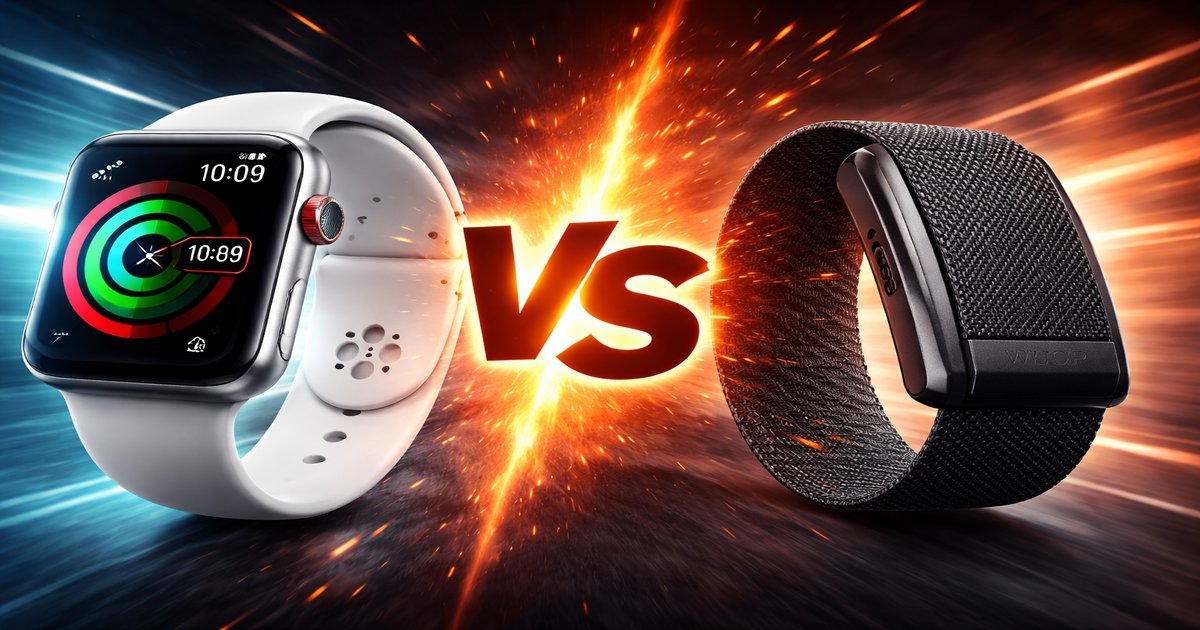
You’re on a quest for the ultimate fitness tracker, trying to decide between the multi-functional Apple Watch and the data-driven Whoop. Both promise to revolutionize your fitness journey, but they cater to different needs. Let’s cut through the marketing fluff and see which one’s the real game-changer for you.
| Feature | Apple Watch | Whoop |
|---|---|---|
| Heart Rate Monitoring | ✓ | ✓ |
| Sleep Tracking | ✓ | ✓ |
| Battery Life | 18 hours | 5 days |
| Display | Yes, Retina | No |
| Device Compatibility | iOS | iOS, Android |
| Subscription Required | ✗ | ✓ |
✅ apple watch Pros
- Seamlessly integrates with the Apple ecosystem.
- Offers a wide range of apps beyond fitness tracking.
- High-quality display for easy interaction.
❌ apple watch Cons
- Short battery life demands daily charging.
- Limited to iOS users.
✅ whoop Pros
- Focuses deeply on recovery and strain metrics.
- Excellent battery life lasting up to five days.
- Platform agnostic, works with both iOS and Android.
❌ whoop Cons
- No display; can’t show notifications or time.
- Requires a subscription for full functionality.
The Apple Watch is like having a mini-computer on your wrist, but its short battery life can be a dealbreaker if you need 24/7 tracking. Meanwhile, the Whoop excels in niches like sleep and recovery but lacks the versatility and instant information access of a device with a screen. If you’re an Android user considering the Apple Watch, forget it; it’s not happening.
If you’re an iPhone user who wants a versatile device that does more than just track fitness, the Apple Watch is your go-to. It’s perfect for those who want smart notifications and advanced features in a single gadget. On the other hand, if you’re a fitness enthusiast who thrives on data-driven insights, particularly around recovery and performance optimization, the Whoop could be your ideal partner. It’s excellent for those who are less concerned about having a screen and more focused on in-depth fitness analytics.