


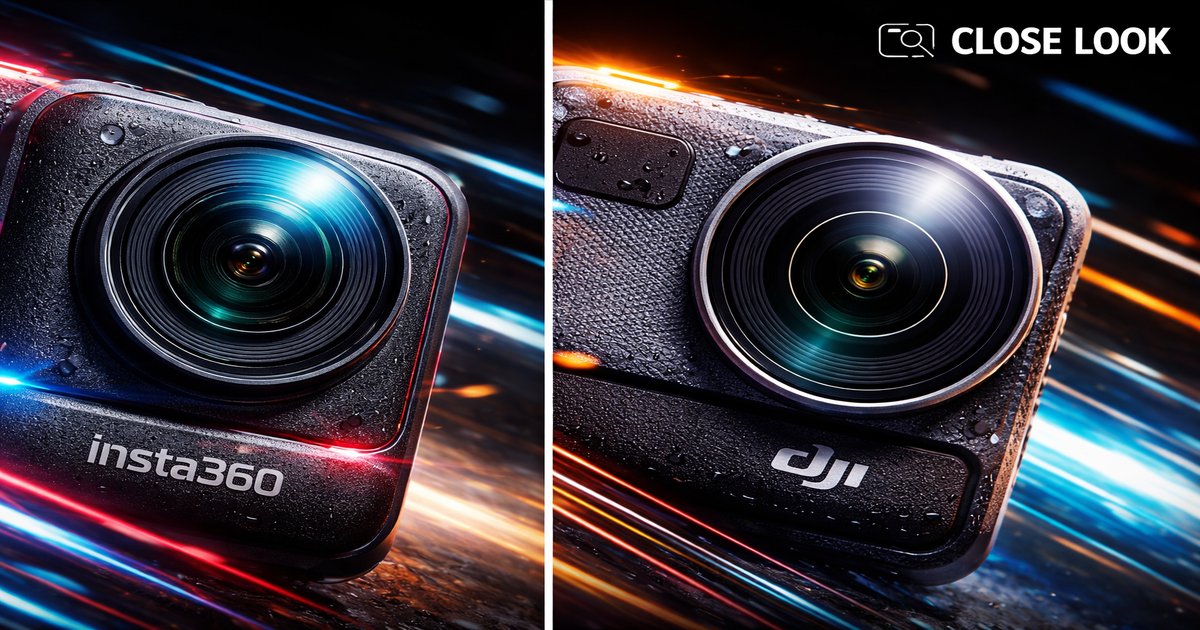
You’re all set for your next big adventure, but the question remains: which action camera should you trust to capture it? If you’re torn between the insta360 and DJI, you’re not alone. Let’s break down these two powerhouses to see which one suits your lifestyle best.
| Specification | insta360 | DJI |
|---|---|---|
| Resolution | 5.7K | 4K |
| Image Stabilization | ✓ | ✓ |
| Waterproof | Up to 10m | Up to 11m |
| Battery Life | 80 minutes | 90 minutes |
| Weight | 149g | 124g |
| AI Editing Features | ✓ | ✗ |
| HDR Video | ✓ | ✓ |
✅ insta360 Pros
- Higher resolution at 5.7K.
- Innovative AI editing features.
- Effective image stabilization.
❌ insta360 Cons
- Slightly heavier than DJI.
- Shorter battery life.
✅ dji Pros
- Lighter and more compact.
- Longer battery life.
- Waterproof up to 11m without a case.
❌ dji Cons
- Lower resolution at 4K.
- Lacks AI editing features.
Performance: Resolution and Editing
The insta360 takes a clear lead in resolution with its 5.7K capability, allowing you to capture every detail with impressive clarity. This is especially crucial if you plan to do any serious editing or cropping post-shoot. The AI editing features are a game-changer for those who want quick, polished results without deep diving into professional software. On the other hand, DJI’s 4K resolution is no slouch and is more than enough for general use. However, it lacks the AI finesse that can make or break the final cut.
Build Quality and Portability
When it comes to build quality, both cameras are rugged and designed for harsh conditions. DJI wins the portability battle, being lighter and slightly more compact. This makes it ideal for those who prioritize easy transport and don’t want to be bogged down by extra weight. Insta360, while heavier, compensates with a sturdy build that feels robust in hand. If you’re a traveler who needs to save every gram, DJI might edge out here.
Value: Battery Life and Features
Battery life is where DJI pulls ahead with its 90-minute duration, a full 10 minutes more than insta360. It might not seem like much, but those extra minutes can make a difference on a long day of shooting. Insta360 counters with its feature-rich offerings, particularly its AI capabilities, which can save you time and effort in editing. The decision here hinges on whether you value longer shooting capacity or advanced editing tools.
Both cameras are solid, but don’t expect miracles. Insta360’s AI features are impressive but can sometimes feel gimmicky if you’re looking for pro-level editing. DJI’s battery life is great, but if you’re shooting in extreme cold, expect it to drain faster. Always have a backup plan.
Our Final Verdict: Which One Should You Buy?
If you’re after top-notch resolution and enjoy the convenience of AI-powered editing, the insta360 is your go-to. It’s perfect for tech-savvy users who want to enhance their footage without spending hours in post-production. On the flip side, if you need a lightweight, reliable companion that can last a bit longer in the field, DJI is your match. Ideal for adventurers who prioritize simplicity and dependability over feature sets.
How does each camera handle low-light conditions?
Both cameras perform reasonably well in low light, but insta360 has a slight edge with its HDR video capabilities, offering better detail in shadows and highlights.
Are these cameras compatible with third-party accessories?
Yes, both insta360 and DJI offer a range of mounts and accessories, although third-party options are more plentiful for DJI due to its widespread use.
How durable are they for extreme sports?
Both models are built to withstand tough conditions, but DJI’s slightly better waterproofing gives it an edge for water sports enthusiasts.