


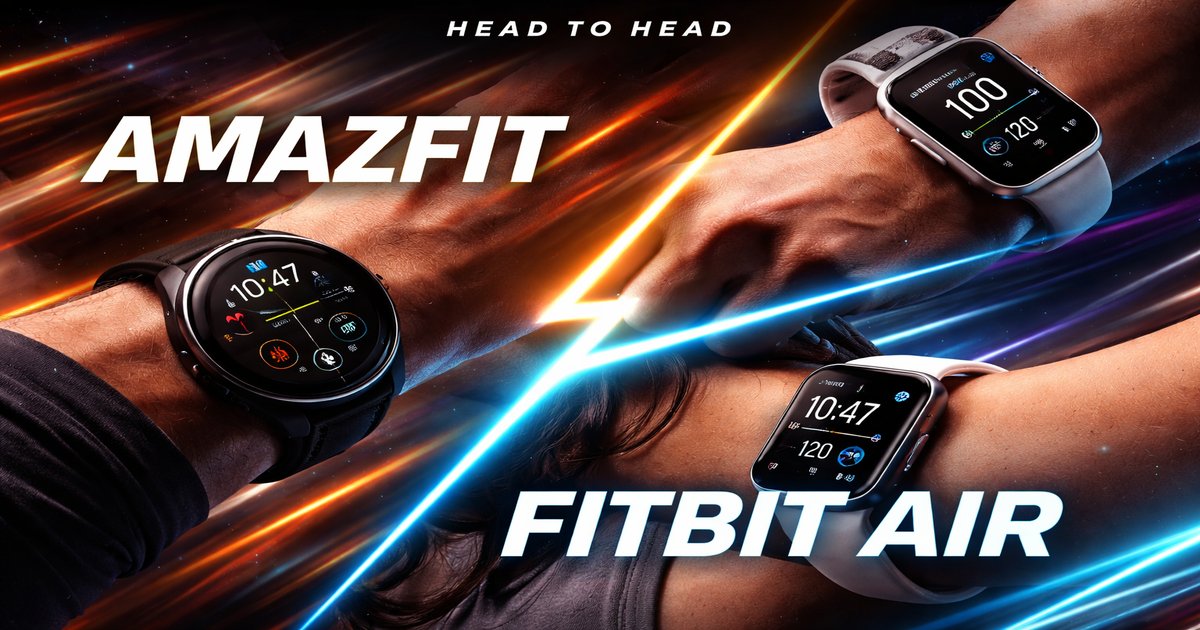
You’ve decided it’s time to get serious about your fitness goals, but you’re torn between the Amazfit and Fitbit Air. Both offer a slew of features, but which one will actually help you crush those goals and fit seamlessly into your lifestyle?
| Feature | Amazfit | Fitbit Air |
|---|---|---|
| Battery Life | 14 days | 5 days |
| GPS | ✓ | ✓ |
| Heart Rate Monitoring | ✓ | ✓ |
| Water Resistance | 5 ATM | 3 ATM |
| Display Type | AMOLED | LCD |
| Price | $149 | $99 |
✅ amazfit Pros
- Exceptional battery life lasting up to two weeks.
- Vibrant AMOLED display that’s easy on the eyes.
- Superior water resistance, making it more versatile for water-related activities.
❌ amazfit Cons
- Pricier than the Fitbit Air.
- App interface can be less intuitive for some users.
✅ fitbit air Pros
- More budget-friendly, making it accessible for beginners.
- Reliable and easy-to-use app with a strong community.
- Lightweight design, great for everyday wear.
❌ fitbit air Cons
- Shorter battery life means more frequent charging.
- Lower water resistance limits use in water sports.
Performance: Does Battery Life Matter to You?
If you’re the kind of person who forgets to charge your devices, the Amazfit’s 14-day battery life is a godsend. You can wear it for nearly two weeks without needing to stress about finding a charger. On the flip side, the Fitbit Air, with its 5-day battery, means you’ll need to incorporate charging into your routine more regularly. However, if you’re diligent about charging and prefer a lighter device, the Fitbit Air’s shorter battery life might not be a dealbreaker for you.
Build Quality: Display and Durability
The Amazfit’s AMOLED display is a clear winner if you prioritize screen quality. It offers vibrant colors and sharp contrasts, which is especially nice if you enjoy checking your stats at a glance. The 5 ATM water resistance also means you can confidently take it swimming. The Fitbit Air, while sporting an LCD display and 3 ATM resistance, is still robust enough for everyday activities and workouts, but less so for aquatic adventures.
Value: Are You Budget-Conscious?
If you’re looking to dip your toes into the fitness tracking world without a big financial commitment, the Fitbit Air is a solid choice. It’s cost-effective and comes with a reputable app. However, if you’re willing to spend a bit more for longer battery life, a better display, and higher water resistance, the Amazfit gives you more bang for your buck. It’s an investment in both style and functionality.
Both devices are solid entries in the fitness tracker market, but neither is perfect. The Amazfit’s app can feel clunky compared to Fitbit’s polished ecosystem, which is a significant aspect if you’re an app-centric user. Fitbit Air’s limited battery life can be a hassle, especially if you’re using GPS regularly. Also, neither device offers advanced health metrics compared to high-end models.
Our Final Verdict: Which One Should You Buy?
If you’re a fitness enthusiast who values long battery life, a high-quality display, and doesn’t mind paying a bit more, go for the Amazfit. It’s perfect for the tech-savvy who want their tracker to keep up with their active lifestyle. On the other hand, if you’re just beginning your fitness journey and want a straightforward, budget-friendly tracker with an excellent app experience, the Fitbit Air is the way to go.
Is the Amazfit compatible with iOS and Android?
Yes, the Amazfit is compatible with both iOS and Android devices, making it versatile for all smartphone users.
How durable is the Fitbit Air?
The Fitbit Air is quite durable for everyday use and workouts, but its 3 ATM water resistance makes it less suited for swimming or intense water activities.
How accurate are the heart rate monitors?
Both devices offer fairly accurate heart rate monitoring, though neither matches the precision of specialized medical devices. They’re suitable for general fitness tracking.